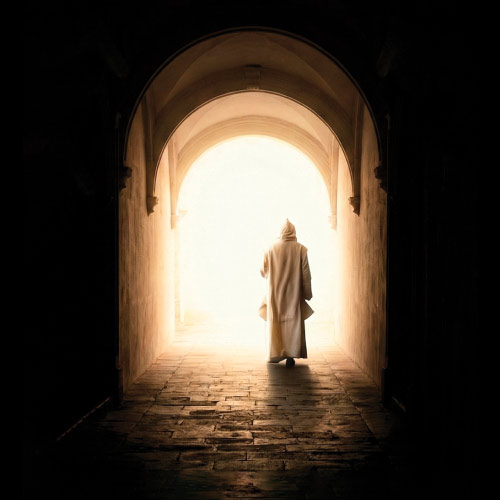


Granada is a city best read through its hills. If the Alhambra represents Palatine power and Nasrid majesty, the opposite hill, the Valparaíso Valley, tells a different but equally powerful story: the rebirth of Christianity in southern Spain. Today, we delve into the Sacromonte Route, not merely as a sightseeing walk, but as a historical pilgrimage to the origins of faith in the city and the antechamber of the resting place of its patron saint, San Cecilio.
Walking these paths, the visitor traverses more than just a picturesque neighborhood famous for its flamenco; they travel a road paved by centuries of devotion, marked by stone crosses, and crowned by one of the jewels of the Archdiocese: the Sacromonte Abbey.
Before the caves were filled with song and dance, this mountain was known as the Valparaíso Valley. Its transformation began in the late 16th century, a turbulent and fascinating time in Granada's history. It was here that the urban geography changed forever due to discoveries that shocked Christendom.
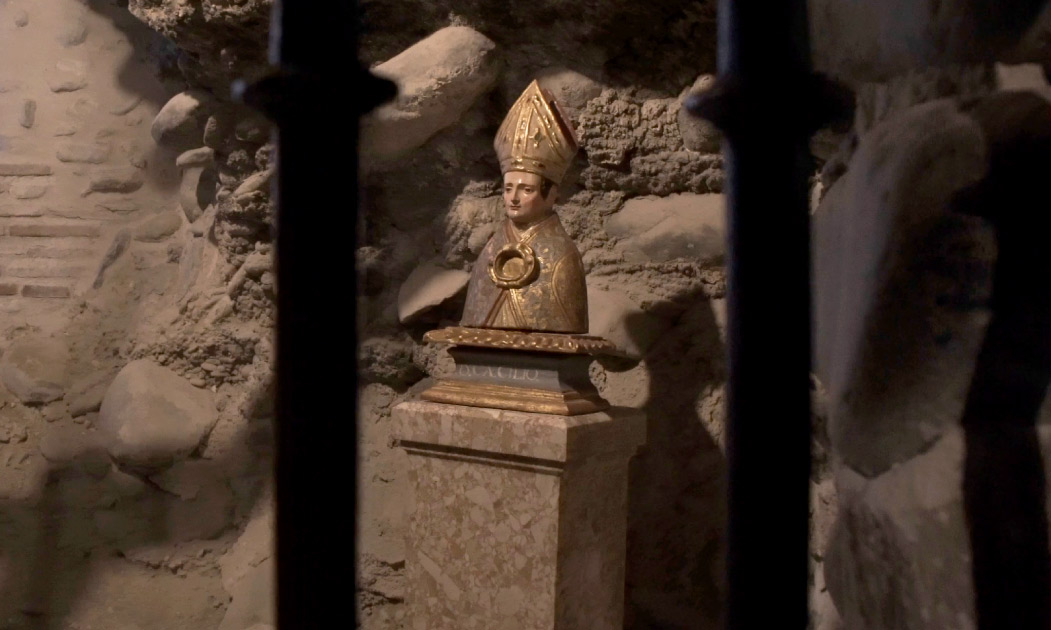
Undertaking this route means understanding that every step brings us closer to the place where, in 1595, lime kilns and the remains of San Cecilio—the city's first bishop—were discovered along with his martyr companions. This finding was significant; it legitimized the antiquity of Christianity in Granada and turned the mountain into a hive of pilgrims. What you see today as a landscape of agaves and prickly pears was, in the 17th century, a constant flow of the faithful climbing in procession, transforming the path into a natural Via Crucis that we can still sense today.
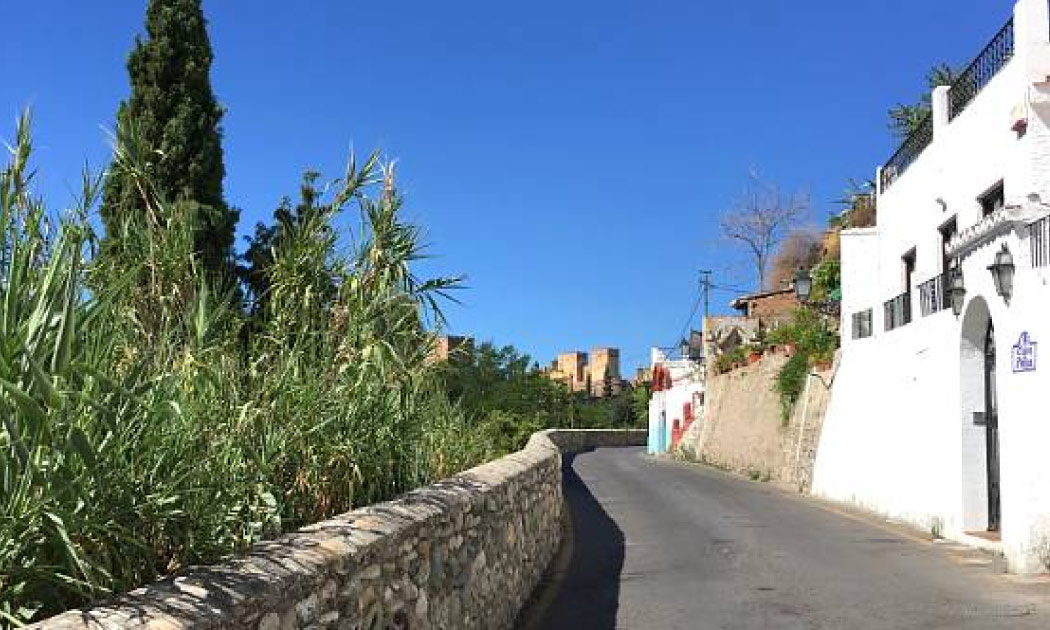
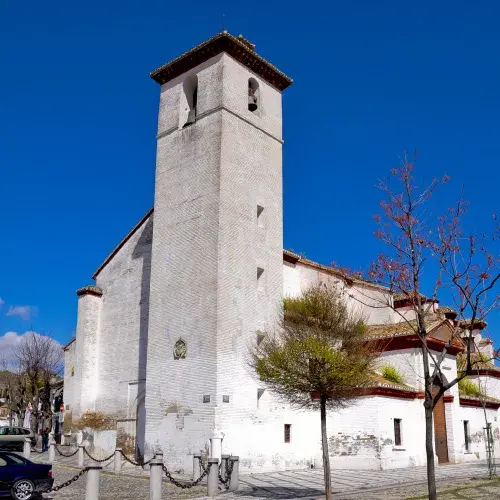
The route to the Abbey is a sensory experience. As we ascend, leaving behind the bustle of the lower Albaicín and the Paseo de los Tristes, silence begins to gain ground. It is impossible not to stop and contemplate the Alhambra from this perspective; it reveals itself fully, red and solemn, visually conversing with the Christian cross that crowns the mount.
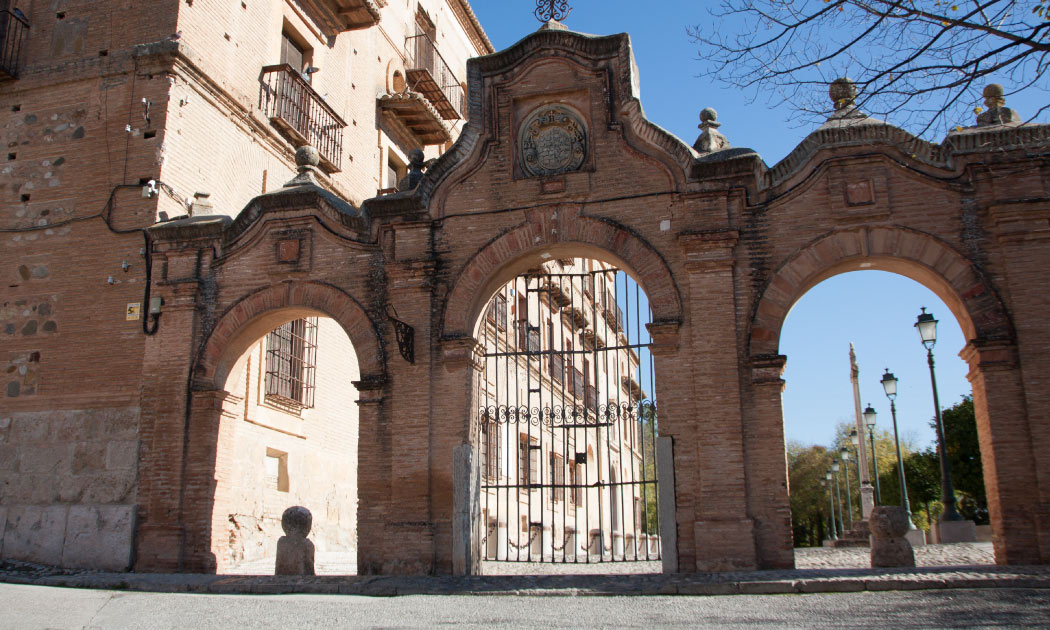
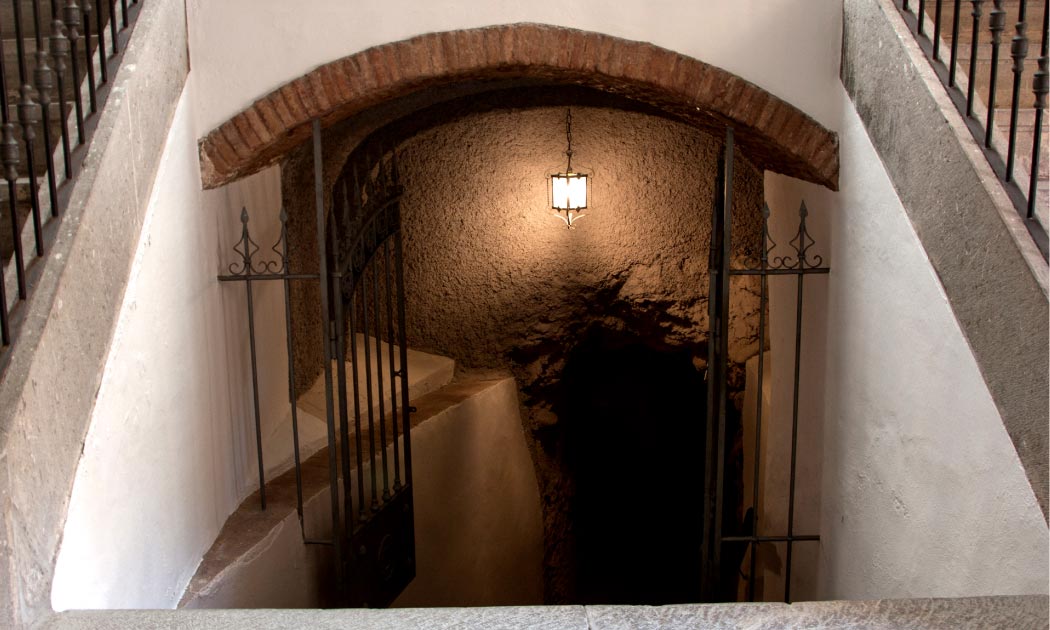
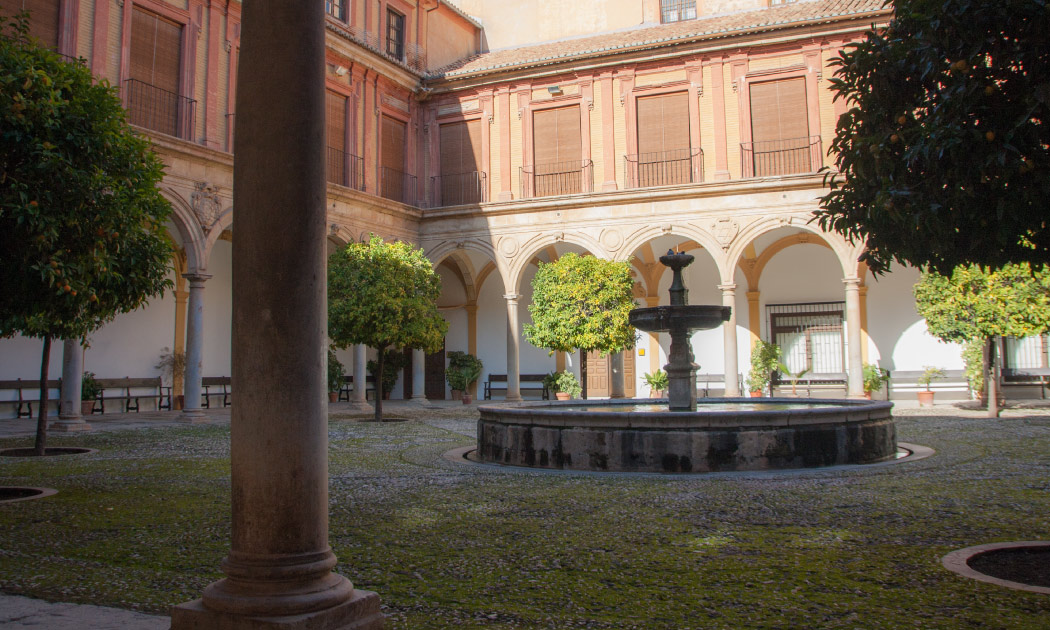
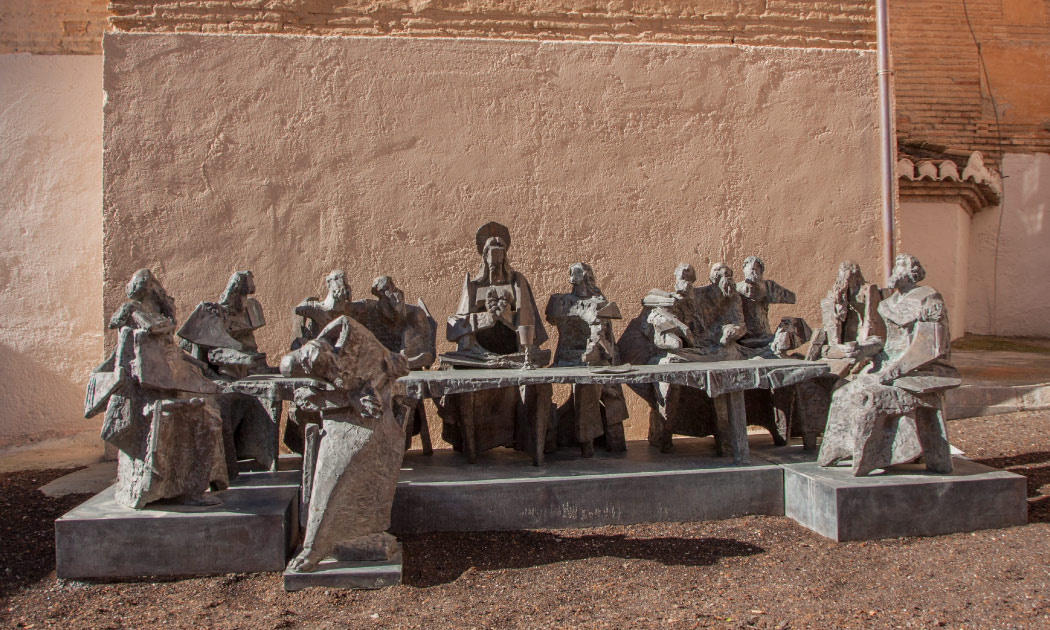
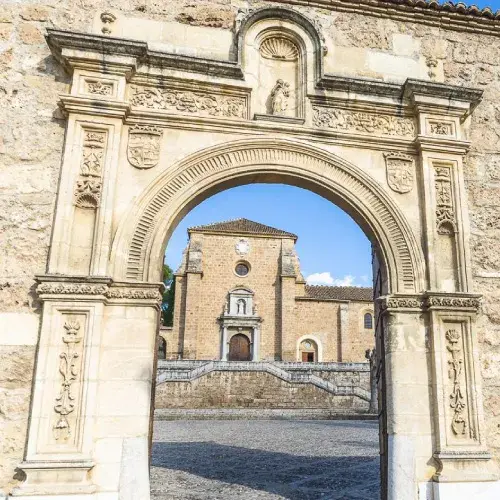
However, the true treasure of the route is its destination. Arriving at the Abbey's esplanade offers a peace difficult to find in the urban center. Here, the figure of Don Pedro de Castro, founder of the Abbey, comes to life. It was his vision and persistence that turned this place into a center of Counter-Reformation and spirituality. When visiting the monument, it is essential to pay attention to the Holy Caves (Santas Cuevas), the underground heart of the complex. Descending into them is descending into history itself, touching the stone where tradition places the martyrdom and feeling the dense atmosphere of centuries of prayer.
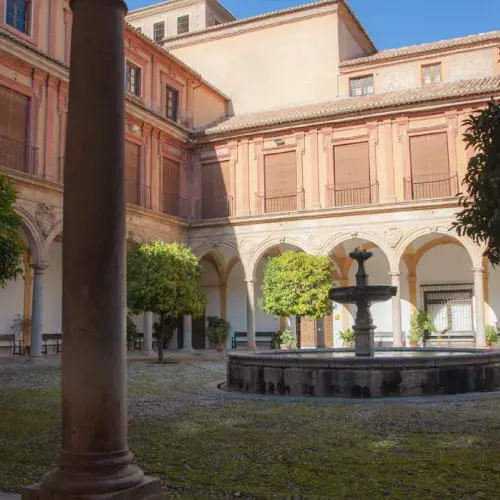
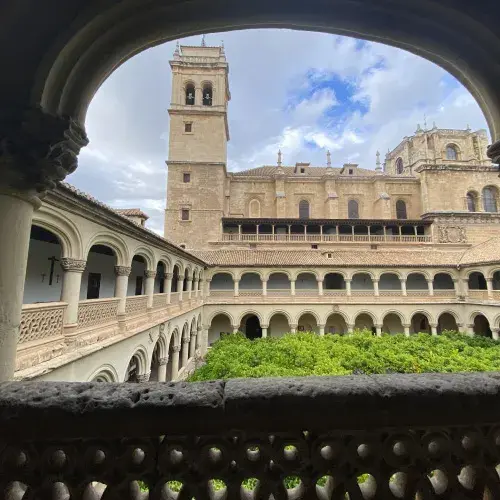
But the route does not end at the stone. Inside the Abbey, sacred art plays a fundamental role in explaining the catechesis of the era. Works by artists of the stature of Sánchez Cotán or unique pieces of goldsmithing speak to us of the importance the city bestowed upon this sacred mountain. It is no coincidence that this is the home of the city's patron saint. Every first Sunday of February, the pilgrimage (Romería) of San Cecilio revives this route, filling the mountain with life, traditional food, and music, reminding us that Sacromonte is a living entity.
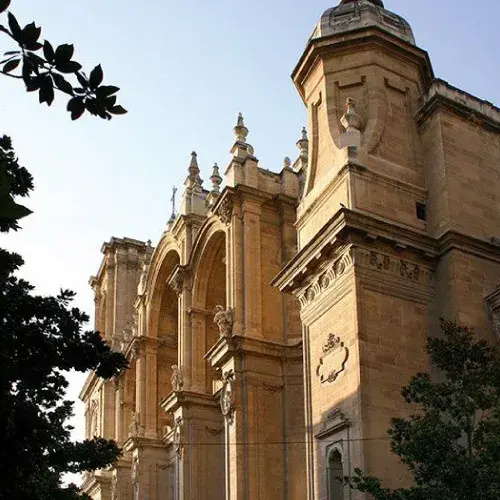
To fully understand the artistic magnitude of Christian Granada, it is highly recommended to complement this visit with the Granada Cathedral, where the dialogue between the Renaissance and the Baroque closes the historical circle that opens here, on the mountain.
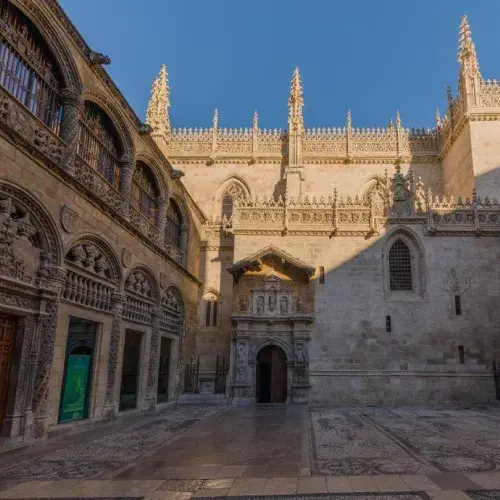
It is interesting to note how the history of Sacromonte intertwines with that of the Catholic Monarchs, even though it is subsequent to them. The Christianization that Isabella and Ferdinand initiated, which materializes solemnly in the Royal Chapel, finds its mystical confirmation in Sacromonte years later. While in the Royal Chapel we see monarchical power and the foundation of the modern state, on the Sacromonte Route we see the popular and mystical response, the search for deep roots connecting the new Granada with the early Christians.
Visiting both monuments offers a 360-degree view: earthly and political power in the city center, and spiritual and ancestral power on the mountain.
We know that Granada has much to offer and that a traveler's time is precious. That is why, from Tickets Granada Cristiana, we always recommend organizing your visit with a global vision. Climbing Sacromonte requires time to be enjoyed calmly, without the rush of the clock.
An excellent strategy is to dedicate a full morning to this route, taking advantage of the early light bathing the Alhambra opposite the Abbey, and reserve the afternoon for the downtown monuments. To facilitate this logistics and, above all, to take care of the visitor's budget, the smartest option is to purchase the Combined Ticket.
You not only simplify your trip by having all tickets in one place, but you also access a reduced price that allows you to discover more for less. This pass includes:
It is the perfect tool for the cultural traveler who wants to understand Granada in its entirety, connecting the dots between the lower city and its sacred mountains.
The Sacromonte Route is, ultimately, much more than a panoramic walk. It is a journey into Granada's identity, its contradictions, its faith, and its immense beauty. We invite you to put on comfortable shoes, open your eyes wide, and above all, prepare your spirit to discover the antechamber of San Cecilio.