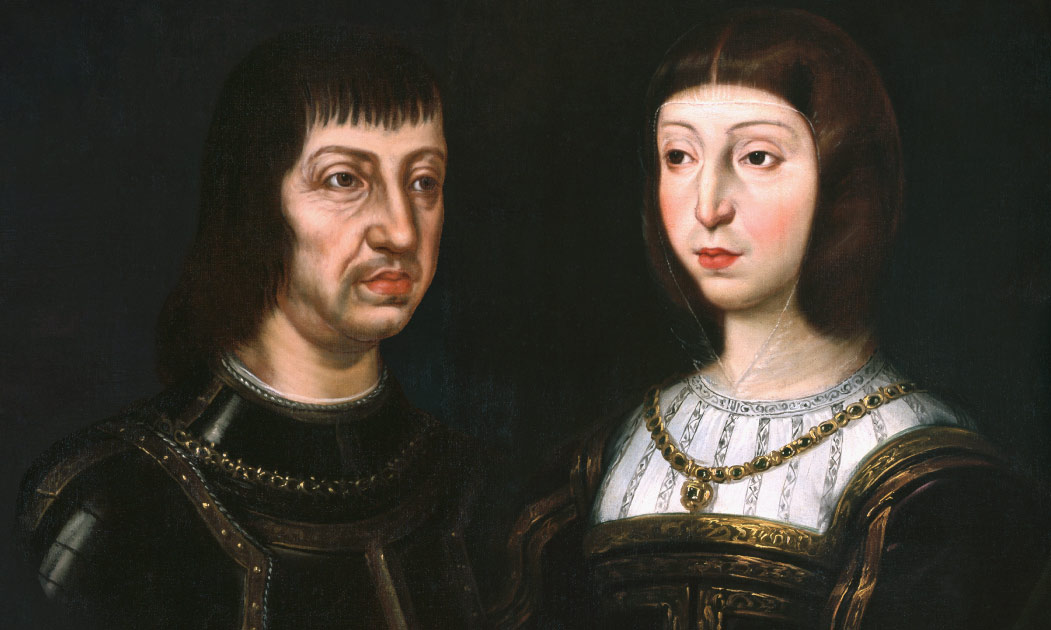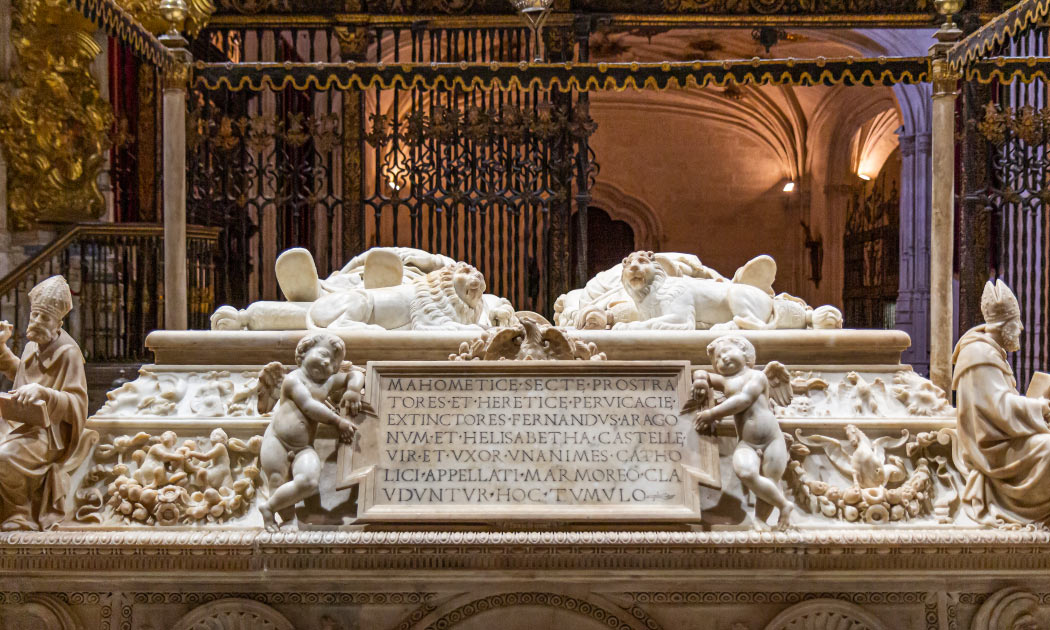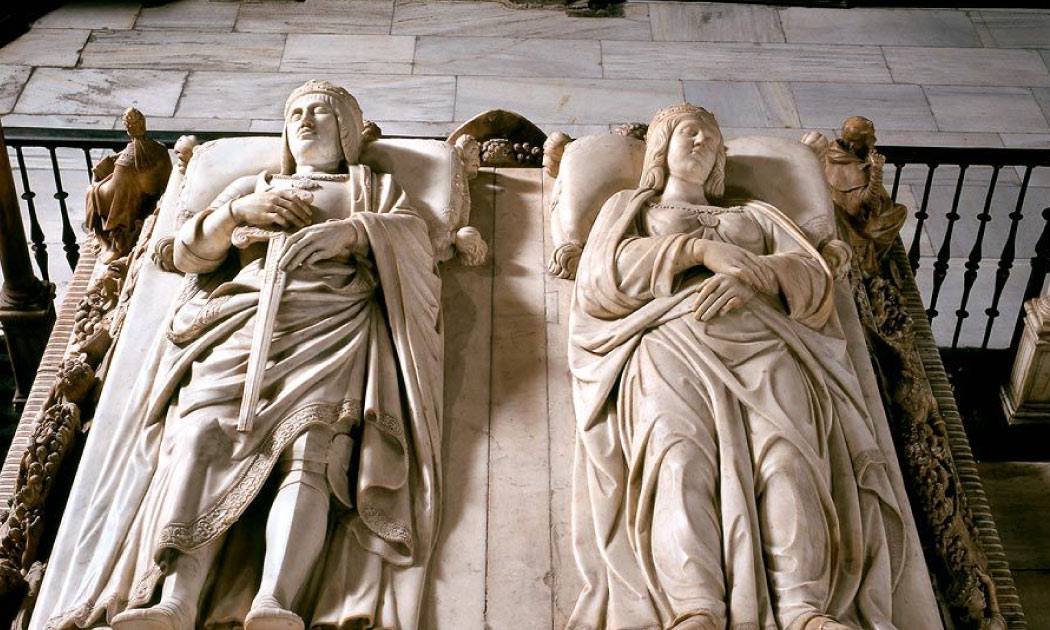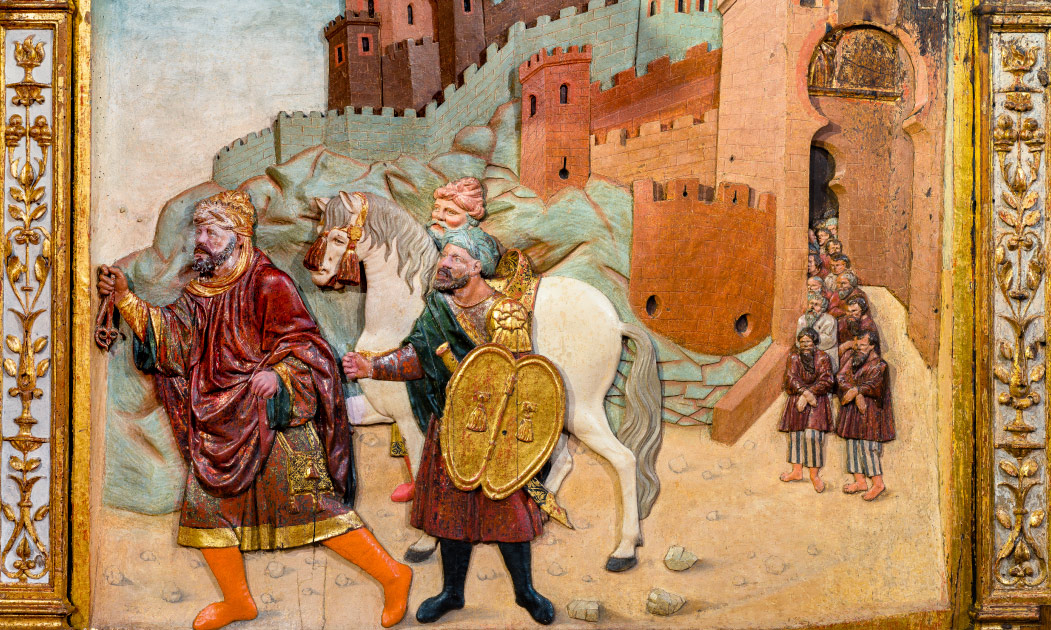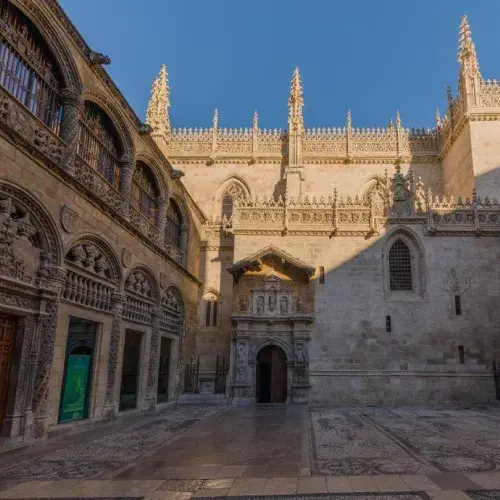


When we think of the legacy of the Catholic Monarchs in the city of the Alhambra, the first image that comes to mind is undoubtedly the majestic Royal Chapel of Granada. This sacred and solemn space was chosen by Isabella I of Castile and Ferdinand II of Aragon as their place of eternal rest. However, to reduce the influence of these monarchs to their mausoleum would be to tell only a small part of the story. The conquest of 1492 was a radical turning point that transformed the urban, cultural, and spiritual physiognomy of the city forever.
The legacy of the Catholic Monarchs can be breathed in every alley, in every Renaissance square, and in the foundations of the most grandiose temples in Andalusia. Today, from Tickets Granada Cristiana, we invite you to rediscover the footprint of Isabella and Ferdinand through a deep journey through the monuments that defined the new Christian Granada.
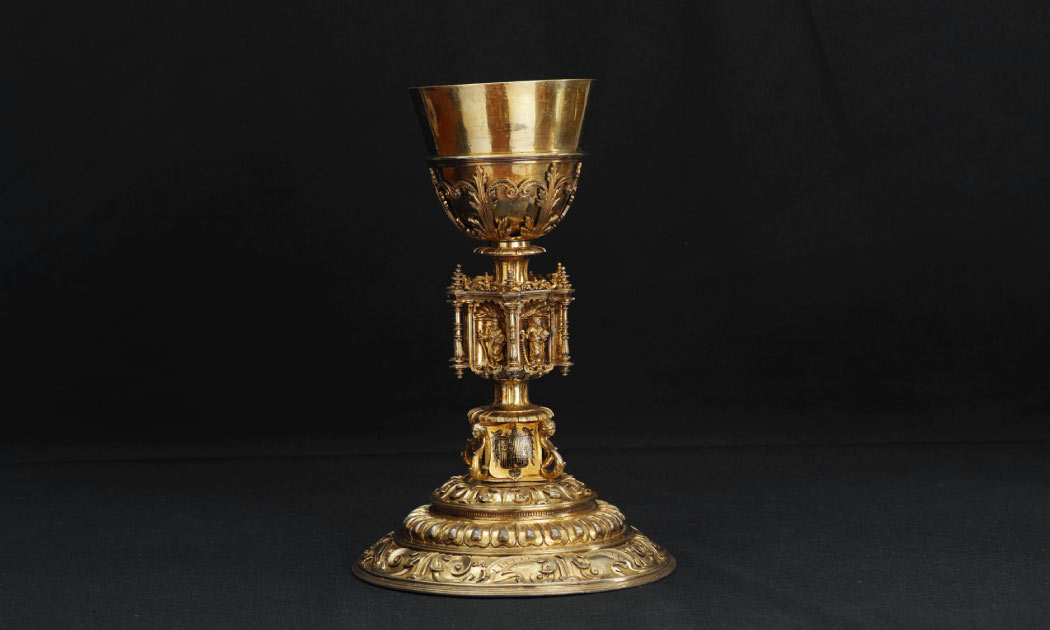
We cannot speak of history without starting at the beginning of their rest. The Royal Chapel was conceived not only as a family pantheon but as a perpetual symbol of the triumph of the Christian faith and the unification of the peninsular kingdoms. Built in the Isabelline Gothic style, its construction was ordered just a few months before the Queen's death. Inside, in addition to the sepulchers of the monarchs (and their daughter Juana la Loca alongside Felipe el Hermoso), lies the Sacristy-Museum. This space guards an invaluable collection: the Queen's crown and scepter, King Ferdinand's sword, and an extraordinary display of Flemish paintings that were part of Isabella the Catholic's private devotion.
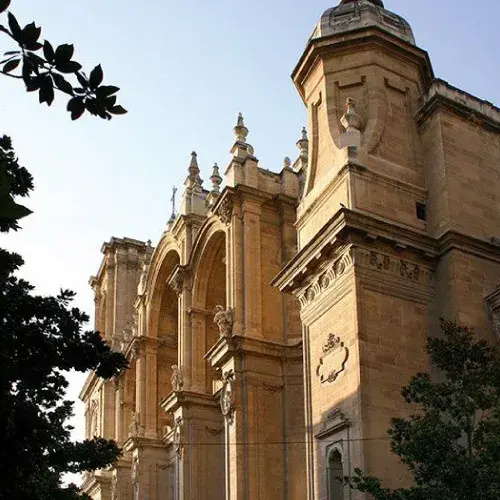
A few steps from the Royal Chapel stands one of the most impressive temples in Spain: the Granada Cathedral. Although its construction began years after the death of the Catholic Monarchs, under the mandate of their grandson Charles V, the seed of this monumental work undoubtedly belongs to the legacy of the Catholic Monarchs. It was they who established the need to erect a grand temple on the site of the ancient Great Mosque to symbolize the Christian victory.
The Cathedral, designed mostly by the brilliant architect Diego de Siloé, is a masterpiece of the Spanish Renaissance. Its Corinthian pillars, its impressive Main Chapel, and its imposing vaults reflect an era of artistic splendor that changed the skyline of Granada forever. Visiting it is understanding the magnitude of the imperial project initiated by Isabella and Ferdinand.
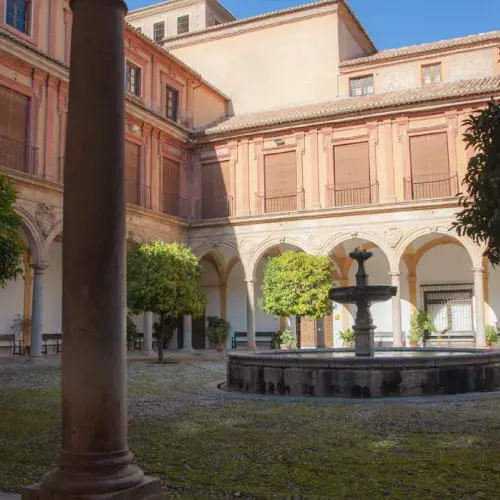
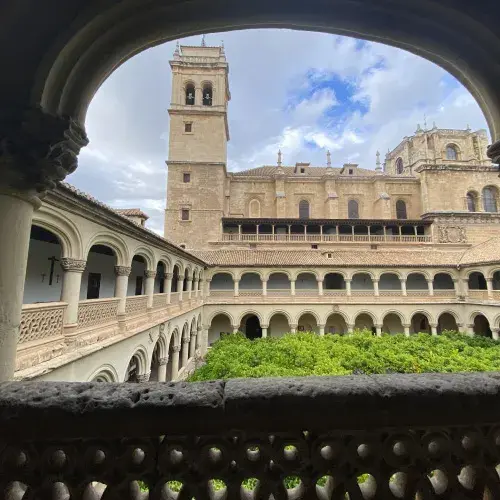
If you are looking for the chronological and architectural start of the legacy of the Catholic Monarchs after the Conquest of Granada, you must direct your steps towards the Monastery of San Jerónimo. A little-known fact is that this was the first Christian building to be constructed in the city after 1492. The foundation of the monastery was closely linked to the monarchs and the "Gran Capitán" (Great Captain), Gonzalo Fernández de Córdoba, the brilliant military strategist whose feats were key to the Spanish crown.
The current temple, whose church was built with the intervention of great masters such as Jacobo Florentino and Diego de Siloé himself, serves as a family pantheon for the Great Captain and his wife, the Duchess of Sesa. Its Renaissance main altarpiece and its cloisters—including the famous Empress Cloister, where Isabella of Portugal lived—are silent testimonies to a fascinating era of transition.
History is not only enclosed within stone walls; it also lives in the streets, in legends, and in written testimonies. At Tickets Granada Cristiana, we know that the best way to immerse yourself in this era is by walking. Therefore, our guided tours, such as the Route of Isabella the Catholic, offer an intimate and different perspective. During this tour, visitors discover not only the visionary stateswoman who financed Columbus's voyage but also the woman of deep devotion, the strategic wife, and the mother concerned about the fate of her lineage. Walking through 16th-century Granada through her eyes is a revealing experience that perfectly complements the visit to the monuments.
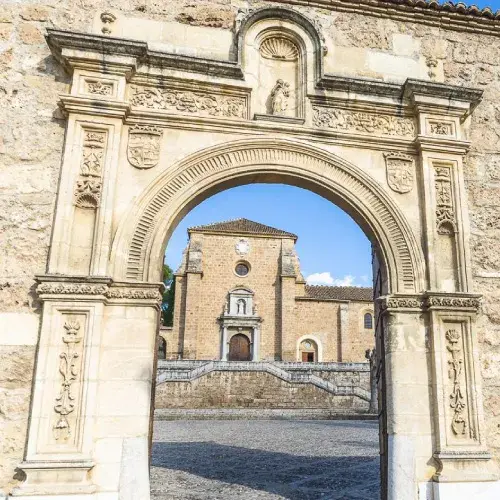
The religious and constructive momentum initiated by the Catholic Monarchs laid the foundations for the subsequent development of other highly important spiritual enclaves in Granada. The expansion of the city and the strengthening of the Christian faith provided the perfect environment for the construction of the sumptuous Carthusian Monastery, a jewel of the Andalusian Baroque where architecture and art merge in spaces of dazzling beauty like its Sacristy. Similarly, decades later, the Sacromonte Abbey would flourish, the cradle of the lead books and the epicenter of Granadan spirituality among caves and legends.
Understanding the legacy of the Catholic Monarchs means embracing the complete history of Granada. Every temple, every vault, and every altarpiece make up a fascinating historical puzzle. The best way not to miss a single detail and travel back in time is through our Combined Tickets.
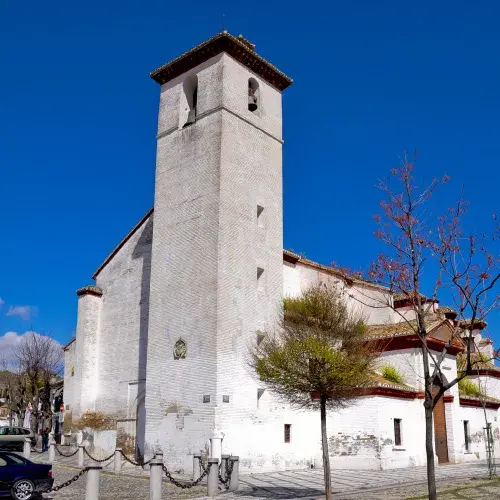
With a single pass, you will not only save time and money, but you will have direct access to the architectural jewels of the city: the Granada Cathedral, the Royal Chapel, the Carthusian Monastery, the Monastery of San Jerónimo, the Sacromonte Abbey, and the spectacular panoramic view from the Church of San Nicolás.
Are you ready to walk through living history? Plan your route, choose your dates, and feel the magic of the Granadan Renaissance. Book your Combined Ticket today and secure your journey into the past.